Ship managers describe their own business differently depending on who you ask — and that’s not really a contradiction, it’s a sign of how much the role has expanded.
Splash247’s Shipmanagement Market Report 2026 picked up on this directly. Several CEOs are questioning whether “third-party” still fits what the relationship has become, and floating alternatives that better reflect the depth of the work.
What “third-party” leaves out
The term implies distance — an arm’s-length vendor relationship, brought in for a defined task. But the executives in that report describe something considerably broader: safety management, regulatory compliance, performance monitoring, data governance, and long-term stewardship of the asset over its life. That’s a gap between the label and the job — distance implied, when what’s actually being asked of a manager today looks more like a standing commitment.
Some of the alternative language floated leans toward describing the manager as an embedded technical partner, or a long-term custodian of the vessel, rather than an outside contractor handling a defined scope. One contributor in the report made a useful distinction: the frustration with “third-party” isn’t really about outsourcing itself, it’s about outsourcing done at arm’s length, without real partnership behind it.
A familiar idea, said differently
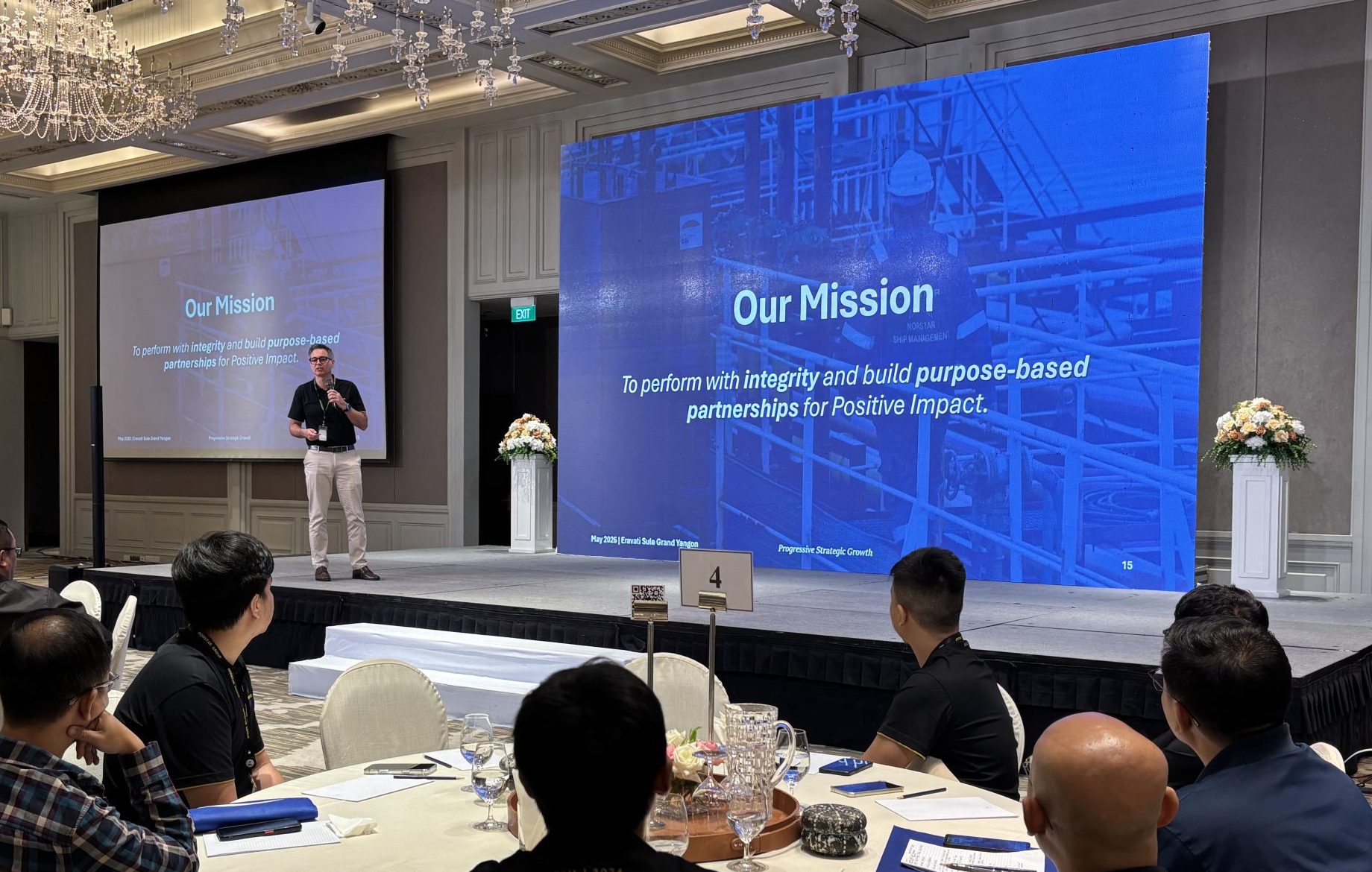
At Norstar, this framing feels familiar. In January this year, Norstar Group’s Co-owner Tom Bonehill introduced an update to our mission — “To Perform with Integrity and Build Purpose-based Partnerships for Positive Impact” — and owners have always been one of the stakeholders that partnership language was written for.
“A purpose-based partnership means moving beyond the traditional ship manager-client relationship. When owners succeed, we succeed. Our role is not only to manage ships, but to stand alongside owners as a trusted partner, helping them navigate challenges, seize opportunities and build a sustainable future together.”
— Sau Weng Tang, Managing Director Norstar Ship Management
In practice, that means making decisions by asking what’s best for the owner’s business, reputation, people, and long-term success — not just what’s required under the management contract. One example: when owners are evaluating new fuel technologies, vessel investments, or operational improvements, Norstar doesn’t simply manage the vessel to existing requirements. The work extends to assessing risk, exploring options, engaging industry partners, and helping shape the strategy — because the goal isn’t just operating the ship safely today, it’s helping the owner stay competitive and future-ready.
That kind of partnership tends to show up most clearly during the difficult periods — an operational incident, a regulatory shift, a market downturn, an unexpected commercial challenge. That’s when the relationship either holds as a genuine partnership or reverts to a client-vendor arrangement. Success, in the end, isn’t measured by whether a management agreement was fulfilled. It’s whether the owner reaches their own long-term goals, and whether they’d call the relationship a trusted one.
A purpose-based partnership, as we think about it, isn’t a contract or a commercial arrangement — it’s a collaboration where both sides work toward something that goes beyond the numbers. It’s a higher bar than a service-level agreement, and closer to what a fleet actually needs from the company managing it day to day.
What matters more than the label
Whatever the industry eventually settles on calling this relationship — partner, custodian, steward — the label matters less than what it describes. At Norstar, the term that’s stuck is “trusted partner” — not chosen to win a debate about terminology, but because it’s the closest description of how the relationship actually works in practice. The more useful question for an owner is simpler: does a manager behave like a partner in practice? Transparent in how decisions get made, consistent across the fleet, and accountable for outcomes beyond what’s written into the contract.
That’s the standard we’ve been working toward — and it’s good to see the language catching up to it.


 back