
Get in Touch

News and Media

Managed like it’s yours; A Technical Director on the ownership mindset, the standards it demands, and what it truly means to manage a vessel with accountability

14 April 2026

There is a question I come back to before any significant decision: “If this were my vessel, what would I do? Not what is merely convenient. Not what simply ticks a box. What would genuinely serve this ship and everyone who depends on it?”

That question sounds simple. But in practice, it changes how you walk a vessel, how you read an inspection, how you respond when something goes wrong — and how seriously you take the details that others might overlook.

Market cycles come and go. Rates rise and fall. But the way a vessel is managed — the standards held, the culture built, the decisions made when no one is watching — does not change with the freight index. It either reflects an ownership mindset or it doesn’t.

A vessel that performs consistently — that passes vetting inspections with confidence, maintains schedule reliability, and earns the trust of charterers and PSC officers — holds its place in a competitive market. What drives that performance, reliably and repeatedly, comes down to standards and the culture that sustains them.

When a vetting inspector or PSC officer boards a vessel, the assessment begins the moment they step onto the gangway. How the pilot ladder is rigged. Whether the crew on deck is properly attired. The cosmetic condition of the main deck and equipment. These are not peripheral observations — they are reliable signals of what the inspection will find further in.

“Standards visible on the outside rarely differ from those below deck.”

A crew that takes pride in the visible condition of their vessel is almost always a crew operating to the same standard in the engine room, in their paperwork, and in their daily decisions. That culture is built deliberately, over time. And when you care about a vessel the way an owner does, you do not walk past the things that are not right.

That same sense of ownership also means being honest about what is not working — including patterns that have become normalised across the industry. Over the years, the response to every incident, every regulation, and every new audit requirement has followed the same pattern: add a checklist, add a procedure. The intent is always sound. But the accumulation has reached a point where it risks working against itself.

When seafarers are expected to complete an ever-expanding set of forms on top of their core duties, the risk is not just fatigue — it is the erosion of genuine attention. A checklist completed under time pressure becomes a formality rather than a safeguard. Treating a vessel like your own means being willing to ask uncomfortable questions — including about the systems meant to protect it. There is an opportunity for the industry to be more disciplined — to ask not just ‘should we add this?’ but ‘what does this replace?

“Overdoing procedures can produce the opposite of what was intended.”

Technology, used well, helps direct attention where it matters most. Purpose-built diagnostic and monitoring software has changed what is possible in early fault detection — surfacing equipment anomalies well in advance, enabling a planned response at the next port call rather than an emergency one at sea. An owner does not wait for a breakdown before acting. That is the standard I hold myself to.
That conviction was not formed in a management role. It was formed at sea, as a Chief Engineer. Whenever something went wrong — a significant failure or a minor anomaly — I learned to ask the same three questions: why did this happen? What can we learn from it? And how do we make sure it never happens again?

The discipline of going back to the root cause every time, rather than fixing the symptom and moving on, is what keeps you genuinely in control. Not in the sense of authority — in the deeper sense of understanding. You are not reacting to events. You are ahead of them.

“Knowing the cause has always been reassuring — it means you are in control.

It is the standard I expect from every person in my team at Norstar Ship Management. Every superintendent is empowered to make decisions and is accountable for them — not as an administrator following instructions, but as someone with a genuine stake in the outcome. Safety and compliance are the non-negotiable frame. But within that frame, every decision is guided by one question: what would an owner do?
The vessels that hold their ground — in any market, through any cycle —will be those where someone, every day, at every level, is asking that question. Where standards are upheld not because an inspector is coming, but because that is simply how things are done. That is what it means to manage a vessel like it’s yours.
About the Author

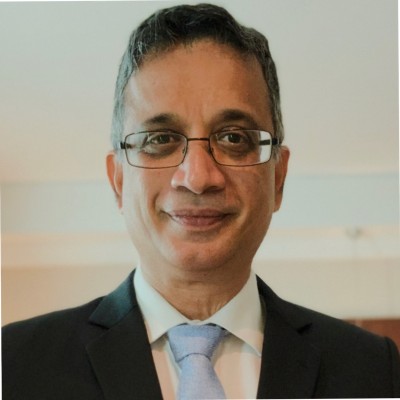
Marlon Conceicao

Marlon has spent nearly four decades in the maritime industry, beginning his career at sea with Essar Shipping, followed by a brief stint with V-Ships and then A.P. Moller – Maersk where he served across all engineering ranks, including seven years as Chief Engineer on VLCCs, aframax tankers, and large container vessels. He moved ashore into technical management roles spanning product tankers, crude carriers, LPG carriers, and bulk carriers — working across Eagle Maritime, Luna Ship Management (which was renamed Norstar Shipmanagement), and Maersk Tankers, where he led technical operations for VLCC & MR Tanker fleets with a focus on fuel efficiency and eco-retrofits. Since 2018, he has served as Technical Director at Norstar Ship Management, heading the technical operations of an international ship management organisation.

REACH US

Helping you move our world

Contact Us